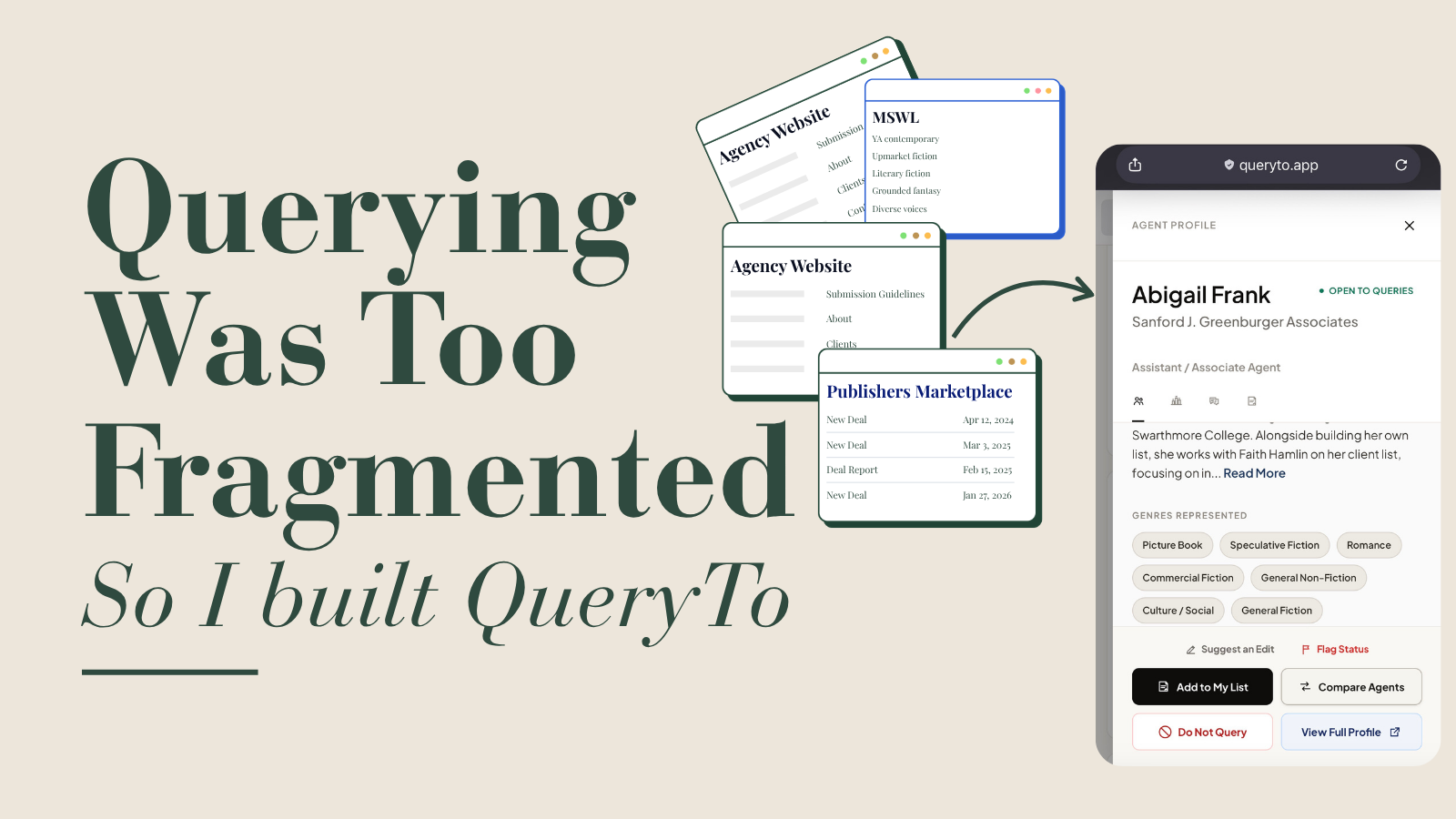
Prefer to watch? I talked about the story behind QueryTo in my first Inside QueryTo video.
I’m not ashamed to say I’ve been in the query trenches for a few years now. For a long time, I thought that if I couldn’t land an agent with my first book—or even my first query campaign—then maybe that meant something was wrong with the book.
What I didn’t understand then was how normal it is for this process to take time.
Since building QueryTo, one of the things that has surprised me most is how many writers I’ve come across who spent years in the trenches before finally making it out. Writers who queried multiple books. Writers who went through multiple campaigns. Writers who collected far more rejections than anyone sees once the success announcement goes up.
And seeing those stories has genuinely changed the way I think about my own writing journey.
The success story usually starts much earlier than we see
There are, of course, writers who write their first book, query it, and land an agent almost immediately.
The publishing gods smiled upon them. Good for them. Truly.
But I used to think those stories were the norm. They’re not.
One writer whose story really stuck with me is Brayden, who I follow on Threads. She co-writes The Word Witches on Substack, where she shared her story of going from hundreds of rejections to multiple offers of representation. She is now repped by Molly Jamieson of United Agents
If you only saw the ending, you might assume her multiple offers or rep came easily. In that article, Brayden shared the amount of work and persistence she put in before she successfully landed an agent.
That is something I wish I had understood years ago. That just because a book flunks in the trenches doesn't mean I will never land an agent. The lesson is that querying writers have to keep going, keep writing, keep querying, till we achieve our dreams.
And for the first time in a while, I’m actually looking forward to revising my own book and eventually heading back into the trenches.
But first, there’s QueryTo.
QueryTo started with my own frustration
QueryTo has now been live for two weeks, which is still slightly surreal to say. But the idea for it started about two years ago, while I was querying my own manuscript.
I remember realizing just how much time I was spending on everything surrounding the actual query.
Finding an agent was one thing. Properly researching one was another.
I’d go to the agent’s website.
Then the agency website.
Then Manuscript Wish List.
Then Publishers Marketplace.
Then sometimes social media, because that might be where an agent had said the most recent or most useful thing about what they were looking for.
Then I’d go back to my spreadsheet and try to document all of it.
Why did I add this agent? What did they say they wanted? Were they open? Were they actually a good fit for my manuscript? Had I already queried someone else at the agency? What version of my query had I sent?
I was juggling multiple browser tabs, spreadsheets, and it took far more time than I expected.
That was the original seed of QueryTo.
I wanted a better way to research agents, build my list, understand why someone might be a fit, and keep track of the entire process without piecing everything together across a dozen tabs and a spreadsheet.
Publishing changed. The workflow should have changed with it.
The more I worked on QueryTo, the more I started thinking about something else:
The tools writers and agents use haven’t necessarily kept up with the way publishing works now. Agents are more visible online. Writers have access to more information. Wishlists are more detailed. Submission expectations change.
Authors increasingly want to know things that may not have been part of the conversation years ago, for example, whether an agent has spoken about AI use or how they approach communication, submissions, or representation.
The querying process may still be opaque in plenty of ways, but it is also more transparent than it once was.
The information exists. It’s just scattered across a gazillion websites.
And that became a much bigger part of what I wanted QueryTo to solve. I wanted to build something that would go beyond a simple query tracker. I wanted something more modern, something that reflect today's querying and publishing process.
Along the way, that also grew into building tools for agents. I’m still taking that side carefully and learning from the agents using and testing QueryTo, but it became clear pretty quickly that you can’t really think about this process without thinking about both sides of it.
Two weeks in
The response to QueryTo so far has been one of the most exciting parts of building it. Authors have joined, explored the platform, sent feedback, and asked for features.
Some of those requests have already made their way into the product. Agents have also started finding QueryTo and joining the beta.
And we are still only two weeks in.
That’s probably why I’m so curious to see what QueryTo looks like three months from now. Or a year from now. Or two years from now.
There is still an enormous amount I want to build. But the core idea remains the same as it was when I was sitting there researching literary agents for my own book: We need modern tools for writers and agents.
If you’re currently in the query trenches—or you know you’ll be entering them in the future—I hope you'll consider trying QueryTo. And if you’re an agent, QueryTo was built with you in mind too.
As for me? Once I get QueryTo to a place where I can breathe a little, I’ll be revising my manuscript.
And then heading straight back into the trenches.
Again.
 Querying, Publishing Industry, Success Stories, Community, Agent InsightsThe QueryTo Society Papers, Volume 2412 min read
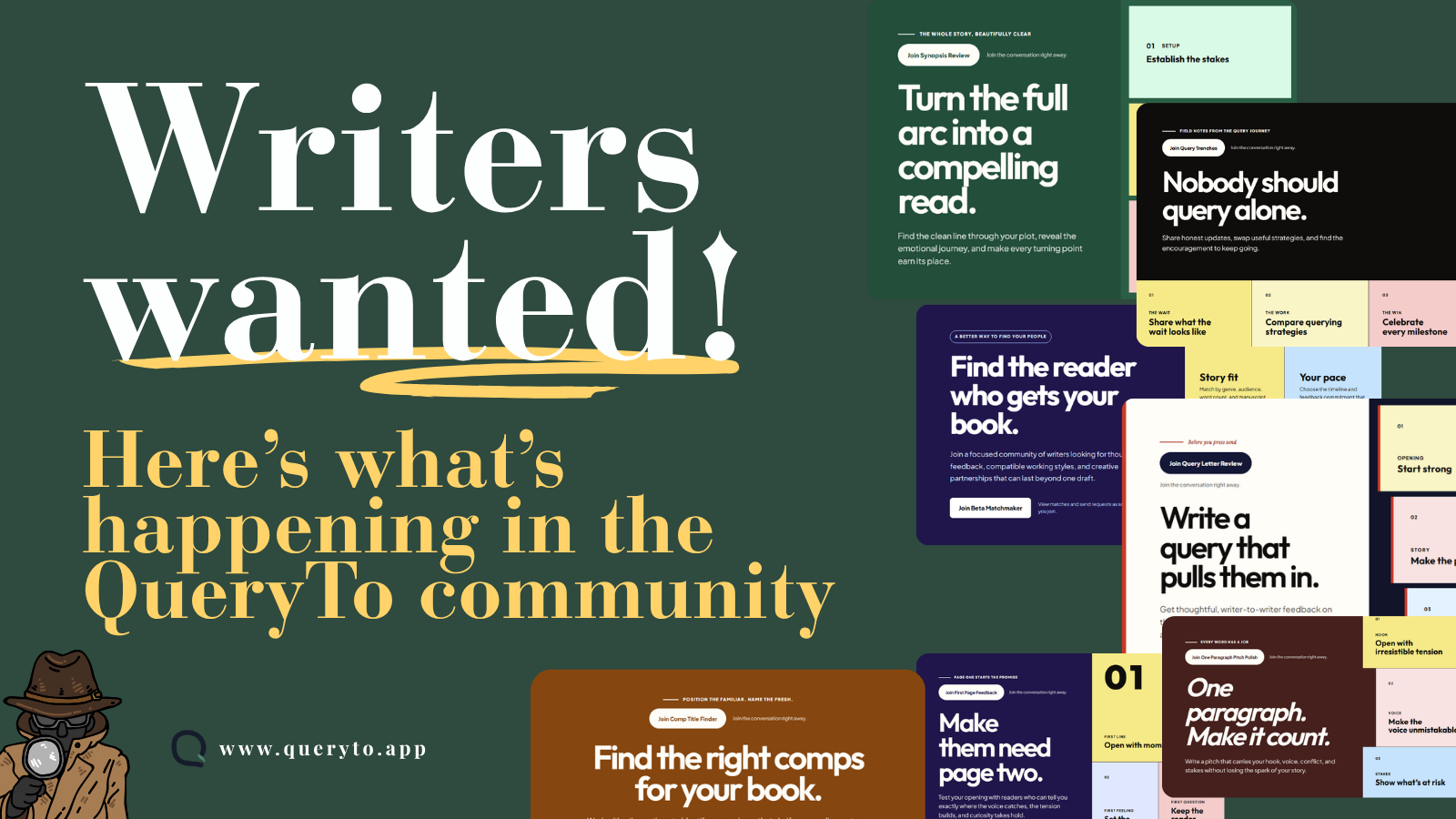 Querying, CommunityWriters Wanted! Here's What's Happening in the QueryTo Community2 min read
 Querying, CommunityQueryTo Society Papers, Volume 215 min read
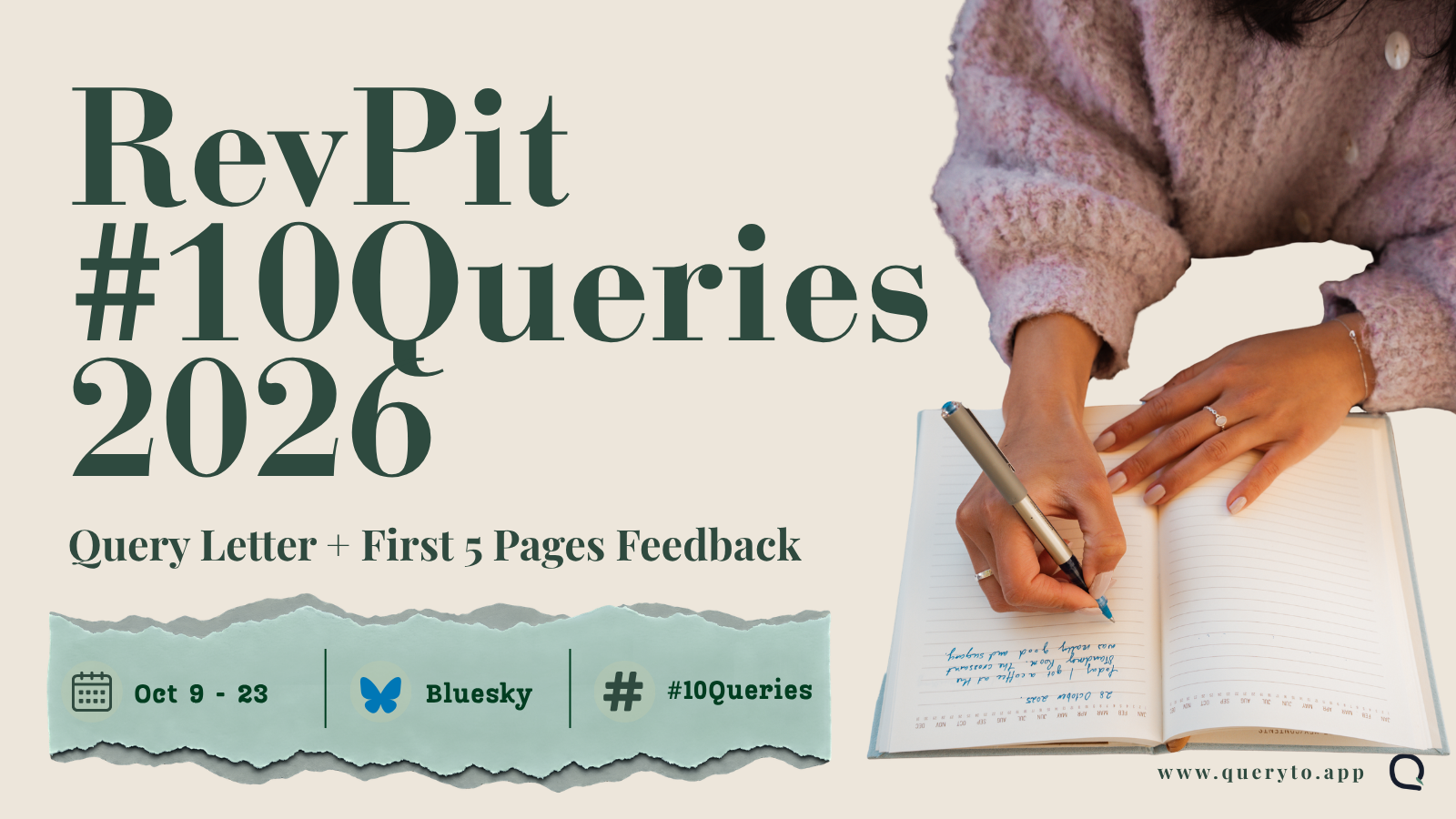 Querying, CommunityRevPit #10Queries 2026: Get Feedback on Your Query + First 5 Pages2 min read
Query with more confidence.
Use QueryTo to research literary agents, organize your query materials, and track submissions in one place.